
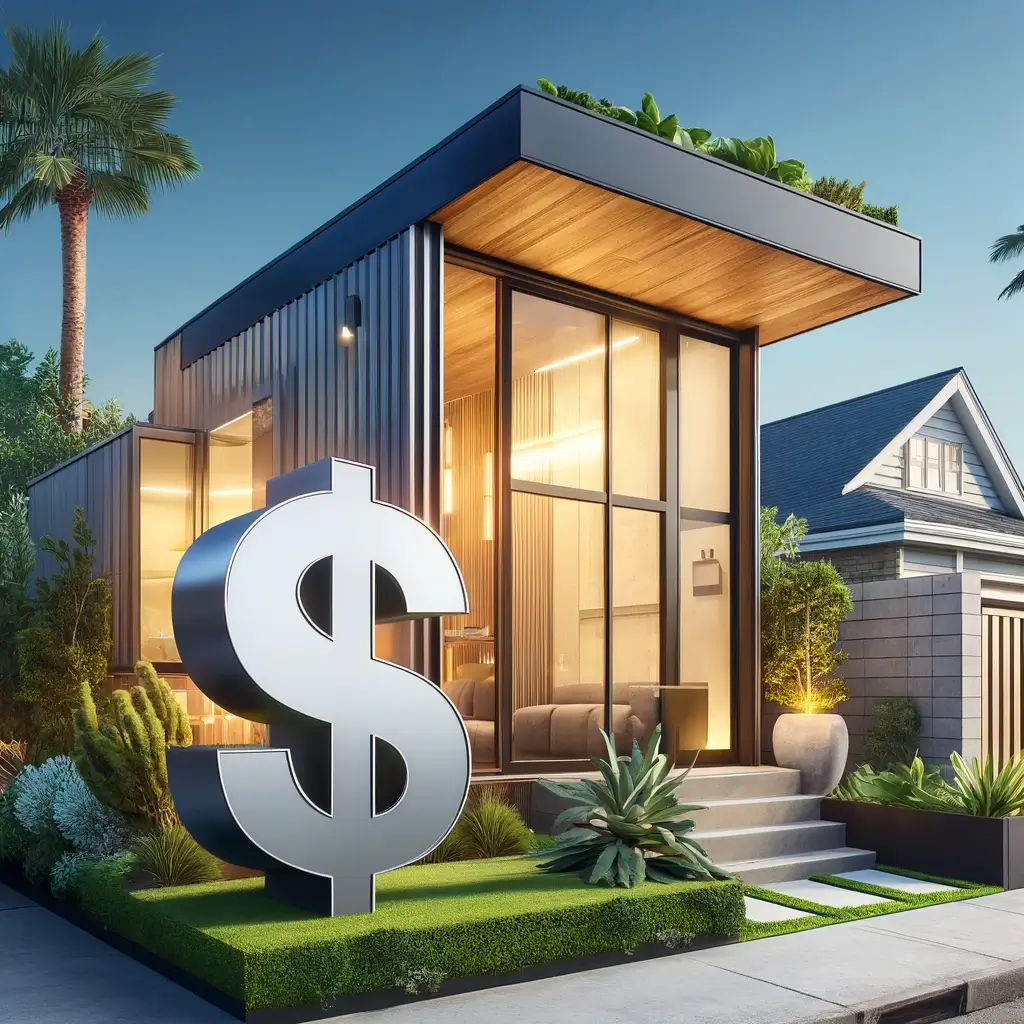
ADU Investment Analysis in Los Angeles: Is Building One Worth It?
Building an Accessory Dwelling Unit (ADU) in Los Angeles is often framed as a cost question, but the more useful question for most homeowners is an investment one: does the math actually work out? This ADU investment analysis walks through the real return drivers, property value, rental yield, and payback timeline, rather than just listing what construction costs.
Introduction to ADUs
Accessory Dwelling Units (ADUs) are secondary housing units on a single-family residential lot. They can be attached or detached from the primary residence and come in various forms, such as backyard cottages, garage conversions, or basement apartments. ADUs offer a flexible living solution for extended family, guests, or renters, and have become increasingly popular in urban areas like Los Angeles due to their potential to alleviate housing shortages and provide affordable living spaces.
The Two Return Drivers: Property Value and Rental Income
Any real ADU investment analysis has to account for two separate returns, since they behave differently and pay out on different timelines.
Property Value Appreciation
According to the National Association of Realtors, adding an ADU can boost a property’s value by as much as 35%, though the actual increase depends heavily on location, size, and build quality. This is a one-time, realized gain, it shows up whether you ever rent the unit or not, and it’s the part of the return you capture immediately on paper, even if you don’t plan to sell.
Rental Income and Yield
The second return comes from renting the unit out, and this is where the investment case gets more concrete. If a typical Los Angeles ADU costs $150,000-$250,000 to build and rents for $1,800-$2,800 a month depending on the neighborhood and unit size, that works out to roughly 12-20 months of gross rent per $10,000 of construction cost, before accounting for vacancy, maintenance, insurance, and property management.
Estimating a Payback Timeline
Putting those two return drivers together gives a rough payback estimate: a $200,000 ADU renting for $2,200/month generates $26,400/year in gross rent. Before expenses, that’s roughly an 8-9 year payback period on the construction cost alone, separate from and in addition to the immediate value increase captured through appreciation. Actual payback will run longer once you factor in vacancy periods, maintenance, insurance, and property taxes, so this is a starting point for your own math, not a guarantee.
Financing Costs Matter as Much as Construction Costs
An honest investment analysis has to weigh how you pay for the ADU, not just what it costs to build, since financing costs directly cut into your real return.
Home Equity Loans and Lines of Credit (HELOCs)
These loans allow homeowners to borrow against the equity in their property, typically at lower interest rates than personal loans. Because the rate is usually variable, the true cost of capital can shift over the life of the loan, worth stress-testing against a higher-rate scenario before committing.
Cash-Out Refinance
This involves refinancing your existing mortgage and taking out cash based on your home’s current value. It can provide a substantial amount of money for your ADU project, but it also resets your primary mortgage terms, so the comparison against a HELOC should include the cost of refinancing the entire loan balance, not just the new cash withdrawn.
Construction Loans
Some banks offer construction loans specifically for home improvement projects, providing funds upfront and during the construction process. These typically carry higher rates than a HELOC but avoid touching your existing mortgage.
Government Programs and Grants
Los Angeles offers various incentives and grants to promote the development of ADUs. Since these directly reduce your upfront cost basis, they improve your payback timeline more than almost any other single factor, worth researching before finalizing your financing plan.
Additional Considerations: Local Regulations and Zoning Laws
Every county has different requirements and limitations for what can be built, including size, appearance, total floor area ratio (FAR), and setbacks. Researching the different laws for permitting can be exhausting, and interpreting the information can be overwhelming. An architect makes this part of the process much easier. They know the laws and will ensure you are building your ADU legally and complying with all the proper permits.
Importance of Hiring an Architect
An architect can help bring your dream ADU to life. Using state-of-the-art programs to drawings on a sketch pad, an architect will help you to conceptualize your plans. However, they also handle the many other details that go into building an ADU that most people would not think are necessary. Architects can also help keep general contractors on target to meet deadlines and complete the job on time.
Deciding Against Hiring an Architect
Many people choose to build ADUs without the help of an architect. Depending on your skill level and ability to conceptualize spaces, you may be able to work directly with a construction company to design your ADU, particularly if you are converting a space like a detached or attached garage that already has a foundation and some structure laid. Skipping the architect fee also directly shortens your payback timeline, since that’s capital you’re not spending upfront.
In-House Designers
Some construction companies have in-house designers you may work with to design your ADU. Sometimes this comes at an additional fee, but other times, general contractors will include the design portion in their jobs if the scope isn’t very complex.
Conclusion
The real answer to whether an ADU is a good investment in Los Angeles depends on your specific numbers, your construction cost, your realistic rent, your financing rate, and your time horizon, not a single average figure. Running your own ADU investment analysis before breaking ground is the difference between a rewarding addition to your property and an expensive guess.
Ready to unlock the full potential of your ADU? Contact KN Remodeling today, and let’s discuss how we can turn your vision into reality!